
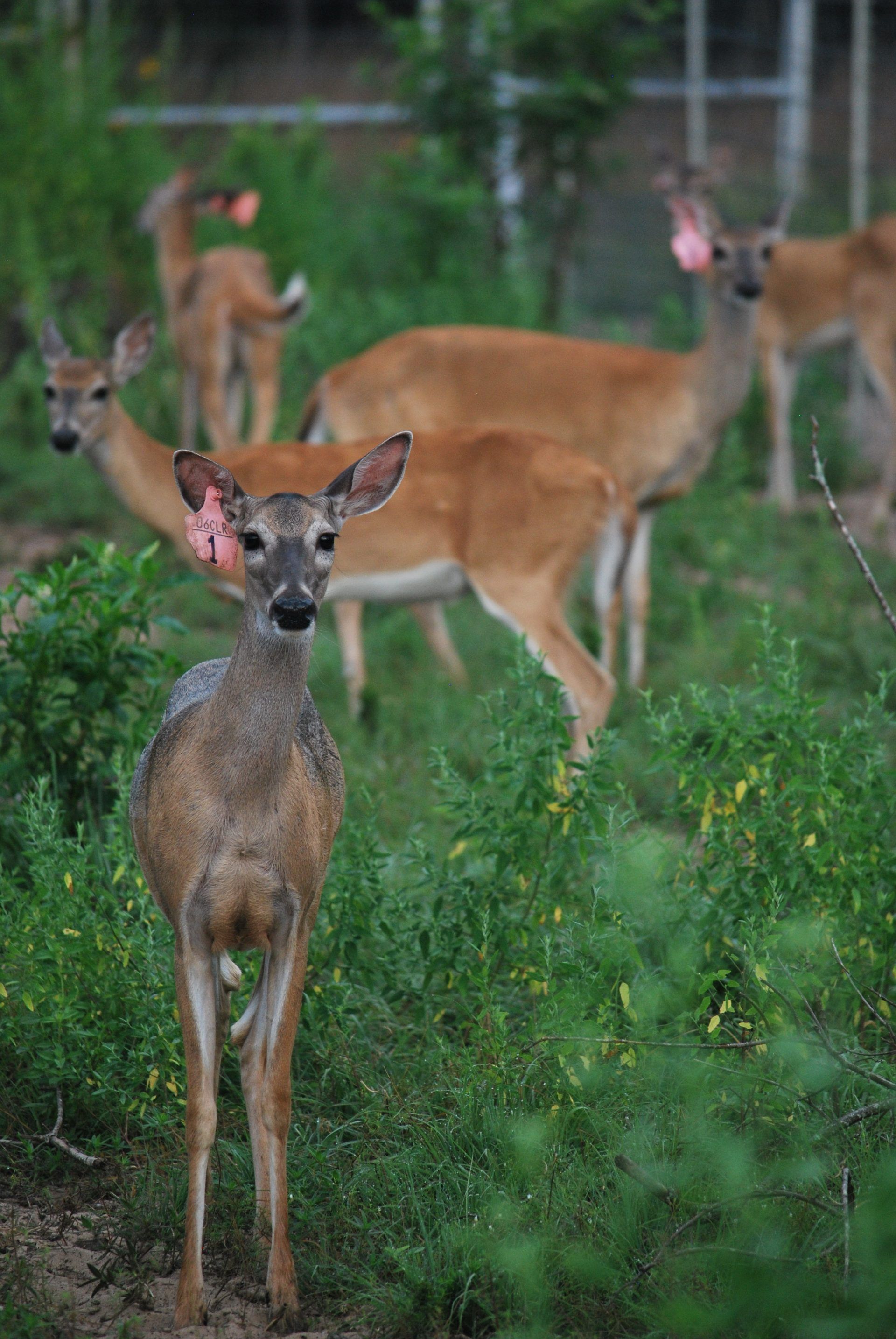
Bred Doe
Bred Does for Sale in Texas
SandJack Whitetails produces Bred Does through an artificial insemination program anchored by verified SS Breeder Bucks—animals selected for a prion protein gene variant that measurably reduces Chronic Wasting Disease susceptibility. Ranches working to replace aging doe stock or build a genetics-forward foundation will find these animals evaluated across both reproductive performance and disease-resistance criteria.
The artificial insemination program at SandJack Whitetails uses semen from premier-rated SS bucks, giving each bred doe's offspring a traceable genetic profile rather than unknown field-bred parentage. Does in this program are also selected for frame durability, body condition and EHD resistance.
Request current availability and genetic documentation to evaluate how these does fit your operation's next breeding cycle.
What Bred Doe Programs Must Actually Address
Bred doe selection requires evaluating the sire's documented SS marker status, the doe's production history, and whether frame genetics have been maintained independently of disease-resistance selection—because programs that optimize for one typically compromise the other. At SandJack Whitetails, the artificial insemination program applies simultaneous selection pressure across all three dimensions, which is why the resulting does carry structural quality alongside verified disease-resistance genetics.
After delivery, does from this program hold body condition through late gestation in a way that reflects the durability selection built into the line. The offspring they produce carry traceable pedigrees with documented SS marker status, giving you a measurable starting point for managing CWD risk at the population level rather than reacting to it after detection.
CWD resistance through SS genetics builds across generations rather than manifesting in a single animal. Meaningful herd-level protection requires thoughtful sire matching over multiple breeding seasons, and the existing composition of your doe population affects how quickly that resistance propagates through the herd.
Common Questions About Bred Doe Genetics
Buyers evaluating bred does often have questions about genetic documentation, SS marker status, and what to expect during the first production season.
What does SS marker status mean for a bred doe?
SS status indicates the animal carries two copies of a prion protein gene variant associated with reduced CWD susceptibility, giving buyers a documentable baseline for resistance-focused herd management.
How are sires selected for this artificial insemination program?
Bucks are evaluated for SS marker status, structural frame quality, and production records before inclusion, ensuring the genetics passing to your herd meet defined criteria rather than assumptions about parentage.
When is the right time to introduce bred does into an existing herd?
Most operations benefit from introducing artificially inseminated does ahead of the next fawning season to integrate new genetics with minimal disruption to existing herd dynamics.
Why does artificial insemination produce more consistent genetic outcomes than field breeding?
The process uses verified sires with documented genetic profiles, which eliminates the uncertainty that comes from natural breeding in a mixed-buck environment.
What local conditions in Texas make SS marker selection especially relevant right now?
CWD has been confirmed in multiple Texas counties, and operations in affected or adjacent areas that begin incorporating SS genetics now are better positioned as disease pressure and regulatory requirements continue evolving.
SandJack Whitetails works with ranches at every stage of herd development—review available doe inventory and the genetic documentation behind each animal to determine which fit your next breeding cycle.