
Build a Better Herd from the Ground Up
Deer for Sale in Texas for ranch owners focused on genetics and long-term herd quality
SandJack Whitetails provides whitetail deer selected for strong genetics and overall quality in Mount Enterprise, helping ranch owners stock properties or develop breeding programs with animals that meet specific herd goals. Each deer is evaluated for health, structure, and genetic potential before being made available, giving you a foundation that supports herd improvement rather than requiring years of culling and correction. Ranch owners working to elevate buck quality or introduce new bloodlines rely on sourcing decisions made at this stage, not after animals are already on the property.
This service involves matching available whitetail deer to your current herd composition, property size, and management objectives, whether you're stocking a newly purchased ranch, replacing animals lost to predation or disease, or strategically adding genetics that your existing herd lacks. The selection process accounts for factors like age class distribution, doe-to-buck ratios, and specific traits you're trying to reinforce or introduce.
Schedule a consultation to review your current herd composition and identify which deer match your ranch objectives.
What Proper Deer Selection Requires
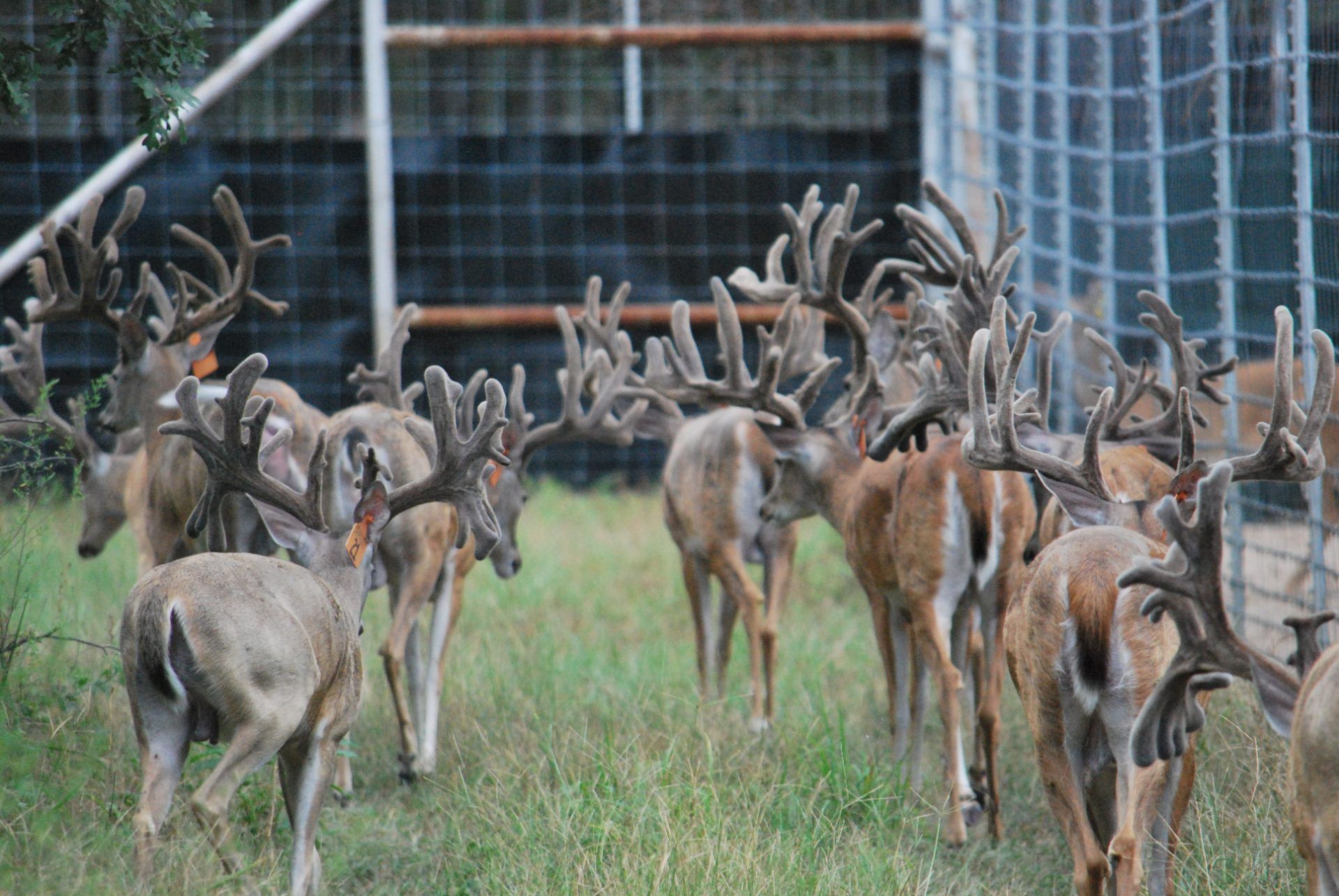
Selecting deer for ranch stocking goes beyond picking animals that look healthy in a pen. You're evaluating body conformation, leg structure, jaw alignment, and observable indicators of genetic quality that influence how those animals perform in a free-ranging environment and what they pass to future generations. Does should show appropriate body mass for their age, strong hindquarters, and maternal traits that suggest reliable fawn-rearing ability, while bucks are assessed for frame size, beam length, and mass characteristics that align with your herd development goals.
Once deer are delivered and released on your property, you'll notice how quickly they adapt to available food sources and cover, how does integrate into existing social structures, and whether bucks hold their condition through the rut. Quality animals transition with minimal stress, maintain body condition on native browse, and begin influencing herd genetics immediately rather than requiring supplemental feed or intensive management to survive their first season.
The process includes evaluating whether deer are suited to your property's habitat type, existing herd density, and available resources, which determines how many animals your land can support without overstocking or creating competition for food and cover. Guidance is provided to help you avoid common stocking mistakes that lead to poor fawn recruitment or declining body weights.
Questions Ranch Owners Ask Before Stocking Deer
Ranchers throughout East Texas often need clarity on the deer selection and stocking process before moving forward with herd development plans.
What factors determine which deer are appropriate for my ranch?
Selection depends on your current herd genetics, property size, habitat quality, and whether your goal is improving antler characteristics, increasing doe quality, or balancing age structure, with recommendations adjusted based on existing deer density and available food sources.
How do I know if deer genetics will match my herd goals?
Genetics are evaluated by reviewing pedigree information when available, assessing physical traits that indicate genetic potential such as body size and antler characteristics in bucks, and discussing what traits you're specifically trying to add or avoid based on your current herd's strengths and weaknesses.
When is the best time to stock deer on a Texas ranch?
Timing depends on your management calendar and stress factors, with many ranchers preferring late fall or winter stocking when temperatures are cooler and deer face less heat stress, though spring stocking works if timed before fawning season and when forage availability is increasing.
What should I prepare before deer arrive on my property?
Your property should have adequate fence height to contain deer, established food sources or supplemental feeding plans in place, water availability throughout the property, and a plan for monitoring new animals as they acclimate to ensure they're adapting to the habitat and integrating with any existing herd.
How many deer should I stock based on my acreage?
Stocking density in Mount Enterprise depends on habitat quality and carrying capacity, but a general guideline is one deer per ten to fifteen acres on properties with good native browse and food plot programs, with lower densities recommended on properties relying primarily on native vegetation without supplemental feeding.
SandJack Whitetails works with ranch owners to evaluate property conditions and herd goals before recommending specific animals, ensuring your stocking decisions align with long-term management objectives rather than creating problems that require correction later. Request a property evaluation to determine how many deer your ranch can support and which genetics fit your program.